Palm Oil Certification - RSPO (P&C and SCCS) and ISPO
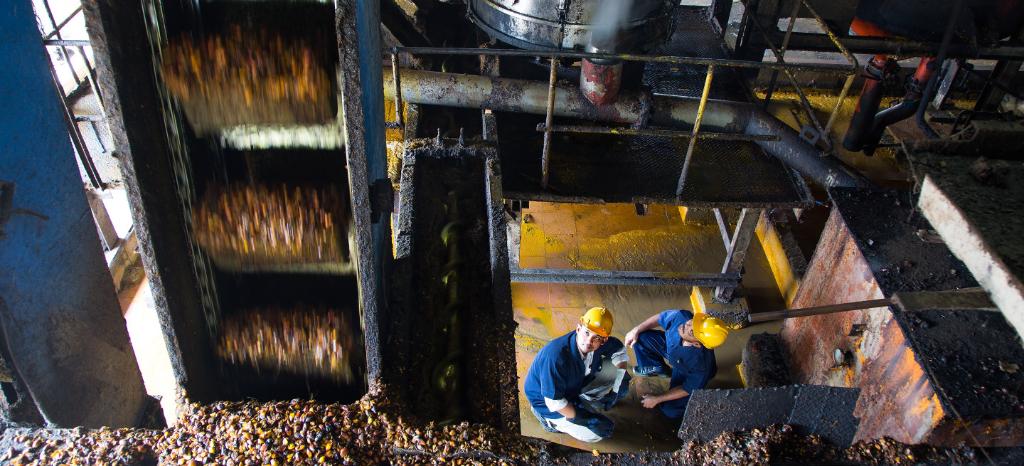
Helping to Promote Growth and Use of Sustainable Palm Oil
The Roundtable on Sustainable Palm Oil (RSPO) was established as a global, multi-stakeholder initiative “to promote the growth and use of sustainable palm oil through cooperation within the supply chain and open dialogue between its stakeholders.” To meet this one principle objective, the RSPO established an international set of standards for palm oil production, known as “Certification of RSPO Principles and Criteria and Supply Chain Systems”. Any company that works with oil palm plantations, palm oil mills, and in derivative palm oil manufacturing can be RSPO and supply chain certified. TÜV Rheinland is acknowledged by the RSPO as an eligible certification body for RSPO certification.
As a leading service provider in the field of audit and management system certifications for protection of the environment, TÜV Rheinland has the expertise your company needs for RSPO and supply chain certification. Our diversified team of auditors is aware of the various requirements of the agriculture industry and is versed in the various environmental, legal, social, and safety aspects covered in the RSPO standard. Their expertise will add value to your operation and the sales and marketing strategy for your product. Ask our experts. We will be glad to help with both RSPO and supply chain certification of your products and processes.
Benefits At A Glance
With TÜV Rheinland as your partner for RSPO and supply chain certification, you:
- Gain better market access for national and international consumption
- Improve your corporate image and reputation
- Benefit from knowledge transfer in best practices on agriculture, environmental, and social aspects
- Enhance the value of certified palm oil as a traded commodity / edible oil
- Ensure that your organization takes environmental responsibility seriously and implements projects and processes for conservation of natural resources and biodiversity
Our Approach
RSPO certification is achieved in five steps, supply chain certification for palm oil in three phases. As your one-stop shop, TÜV Rheinland provides support throughout all phases of auditing, right up to certification and continued monitoring of your compliance with the RSPO standard.
For RSPO certification:
- Phase 1: Application
- Phase 2: Pre-assessment and audit by TÜV Rheinland (optional)
- Phase 3: Public announcement (30 days before certification audit)
- Phase 4: Certification audit by TÜV Rheinland
- Phase 5: Monitoring Audit by TÜV Rheinland
For Supply Chain certification:
- Phase 1: Application
- Phase 2: Certification audit
- Phase 3: Monitoring audit
Our Sustainability Initiatives
Nothing less than the future is at stake. Companies, institutions, public authorities and each and every one of us can play a positive role in shaping the path to tomorrow. We provide you with comprehensive support to ensure that you operate safely, sustainably and efficiently for many years to come.



Indonesian Sustainable Palm Oil (ISPO)
The Indonesian Sustainable Palm Oil (ISPO) is a policy initiated by Indonesia Government in this case Ministry of Agriculture with the purpose for increase the competitiveness of Indonesian palm oil in global market. ISPO is national certification scheme covering all producers in the country (from large-scale to family-scale) and sets the legal standard for good agricultural practices & environmental management. ISPO is expected to bring much needed transparency and legality into the palm oil supply chain, which in turn should result in improved livelihoods for smallholders.
The standards applied for ISPO certification, both for Certification Bodies and/or business operators, are as follows:
1. Presidential Regulation of the Republic of Indonesia Number 16 of 2025 concerning the Indonesian Sustainable Palm Oil Certification System (ISPO)
2. Regulation of the Minister of Agriculture of the Republic of Indonesia No. 33 of 2025 on Indonesian Sustainable Palm Oil Certification for Palm Oil Plantations
3. Regulation of the National Standardization Agency of the Republic of Indonesia (BSN) Number 7 of 2025 concerning Procedures for Imposing Administrative Sanctions on Indonesian Sustainable Palm Oil Certification Bodies
4. KAN K-08.08 Rev.1 LSISPO Palm Oil Plantation
Scope of Certifications:
Sector:
1. Oil Palm Plantation Business
Subsector:
a. Oil Palm Plantation Cultivation Business
b. Palm Oil Mill company have business processing (mill) only
c. Integrated between Oil Palm Plantation and Palm Oil Mill company
2. Oil Palm Downstream Industry
3. Oil Palm Bioenergy Business
Our Approach
ISPO certification is achieved in five steps, supply chain certification for palm oil in three phases. As your one-stop shop, TÜV Rheinland provides support throughout all phases of auditing, right up to certification and continued monitoring of your compliance with the ISPO standard.
For ISPO certification:
- Phase 1: Application and Contract Process
- Phase 2: Pre Assessment (for Permentan 33 Year 2025) *optional
- Phase 3: Certification Audit (Stage 1 and Stage 2)
- Phase 4: Monitoring Audit (for Surveillance and Recertification Process)
For Supply Chain certification:
- Phase 1: Application
- Phase 2: Certification audit
- Phase 3: Monitoring audit
Appeal and Complaint
Appeal
An appeal may be filed by an ISPO Certification applicant due to dissatisfaction with the ISPO Certification decision received. The appeal shall be submitted to TÜV Rheinland Indonesia by attaching the following:
a. A written appeal document signed by the appeal applicant or their attorney;
b. Supporting documents; and
c. A proposed resolution
The TÜV Rheinland Indonesia will establish an appeal resolution team to follow up with it.
Complaint
Complaint regarding dissatisfaction that occurs during and after the ISPO Certification process may be submitted by:
a. Plantation companies
b. Smallholders
c. Affected communities
d. Independent monitors
The complaint shall be submitted to TÜV Rheinland Indonesia by attaching the following:
a. A written complaint document signed by the complainant or their attorney
b. Supporting documents
c. Proposed resolution of the problem.
In the complaint resolution process, there are 3 members, consisting of 2 internal team members from PT TUV Rheinland Indonesia and 1 expert (external). All members for complaint resolution must not have a relationship with the party that submits the complaint and have no interest in resolving the complaint. The complaint resolution team must decide on the complaint no later than 30 (thirty) working days from the date of receipt of the complaint resolution request. TÜV Rheinland Indonesia must resolve the appeal request within 30 working days from the date of receipt of the appeal request.
Applicants who are dissatisfied with the decision of the complaint resolution team can appeal to the ISPO Committee referred to PEPRES No 16 Year 2025. TÜV Rheinland Indonesia is obliged to report the completion of complaints and appeals to the Minister of Agriculture. During the complaint or appeal resolution process, the ISPO certificate that has been issued remains valid. The appeals handling mechanism is publicly accessible on tuv.com. for making appeal/compliant please go to https://www.tuv.com/indonesia/en/forms/global-contact-form/global-contact-form.jsp?requestType=1&contact_id=5835
The Registry of ISPO Certified Organization
The Registry of RSPO Certified Organization
Public Announcement RSPO
Koperasi Mitra Inti Sumber Makmur (EN)
Koperasi Mitra Inti Sumber Makmur (ID)
PTPN IV Reg II Pabatu POM (EN)
PTPN IV Reg II Pabatu POM (ID)
SOCFIN Indonesia - Tanah Gambus (EN)
SOCFIN Indonesia - Tanah Gambus (ID)
PT Indopenta Sejahtera Abadi (EN)
PT Indopenta Sejahtera Abadi (ID)
PTPN IV REG I SEI MERANTI (EN)
RSPO Public Summary Report
Contact