VOC and Formaldehyde Emissions Testing
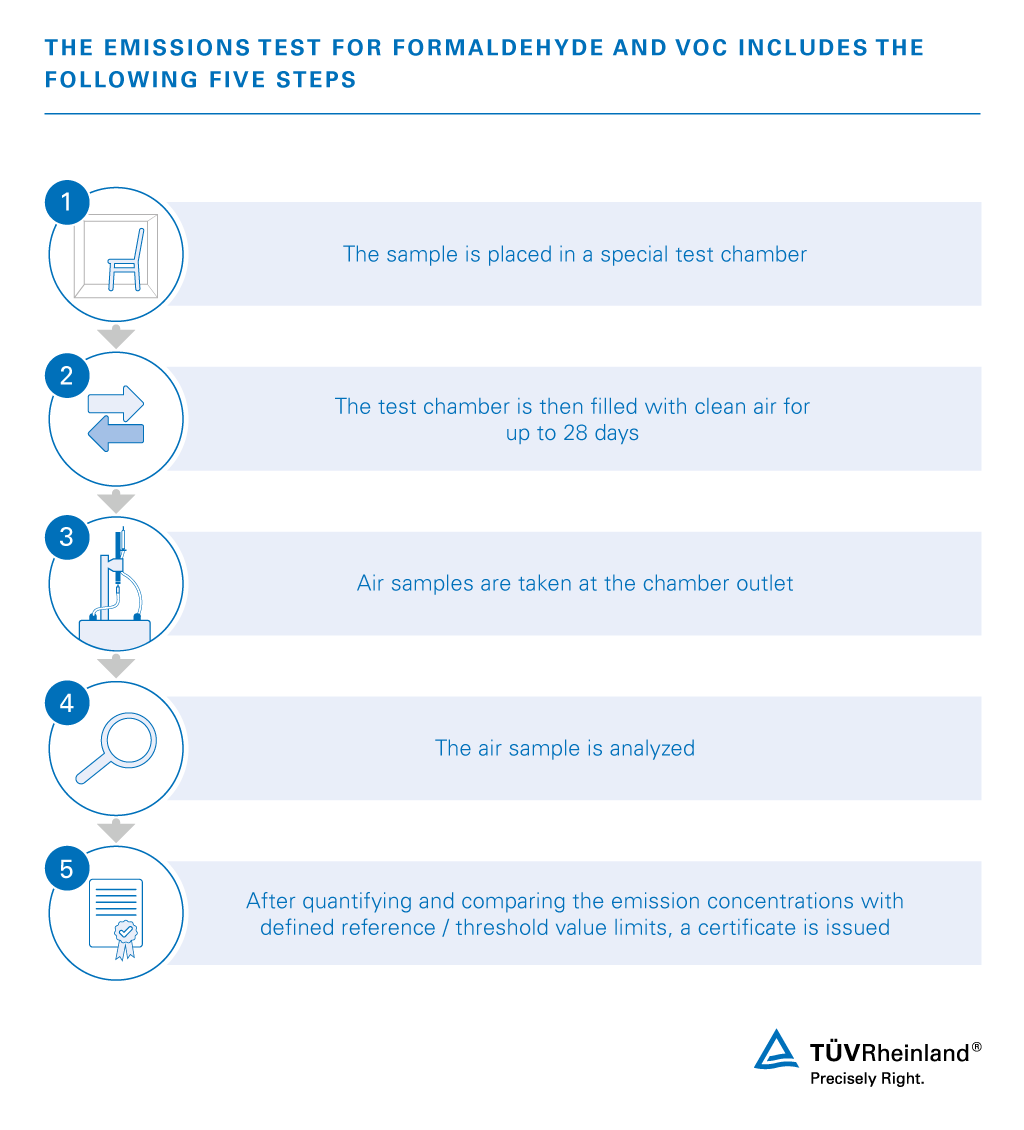
Verified safety through emissions testing
Why is emissions testing critical for assessing the chemical safety of a product? Formaldehyde and other volatile organic compounds (VOCs) can find their way into indoor air and may be harmful to human health. From the paint on the wall to the dining table and the electrical kitchen appliance in our hands – many products and objects we use daily have the potential to release chemical substances into the indoor air. That is why formaldehyde emissions are monitored in accordance with the EU chemicals legislation. The REACH Regulation (EC) No. 1907/2006 specifies the requirements for the registration, evaluation, authorization, and restriction of chemicals. For you as a manufacturer, emissions testing is essential for verifying the safety of your products, which – as a bonus – is a significant factor in guiding customer purchasing decisions.
Be on the safe side with VOC measurements by TÜV Rheinland
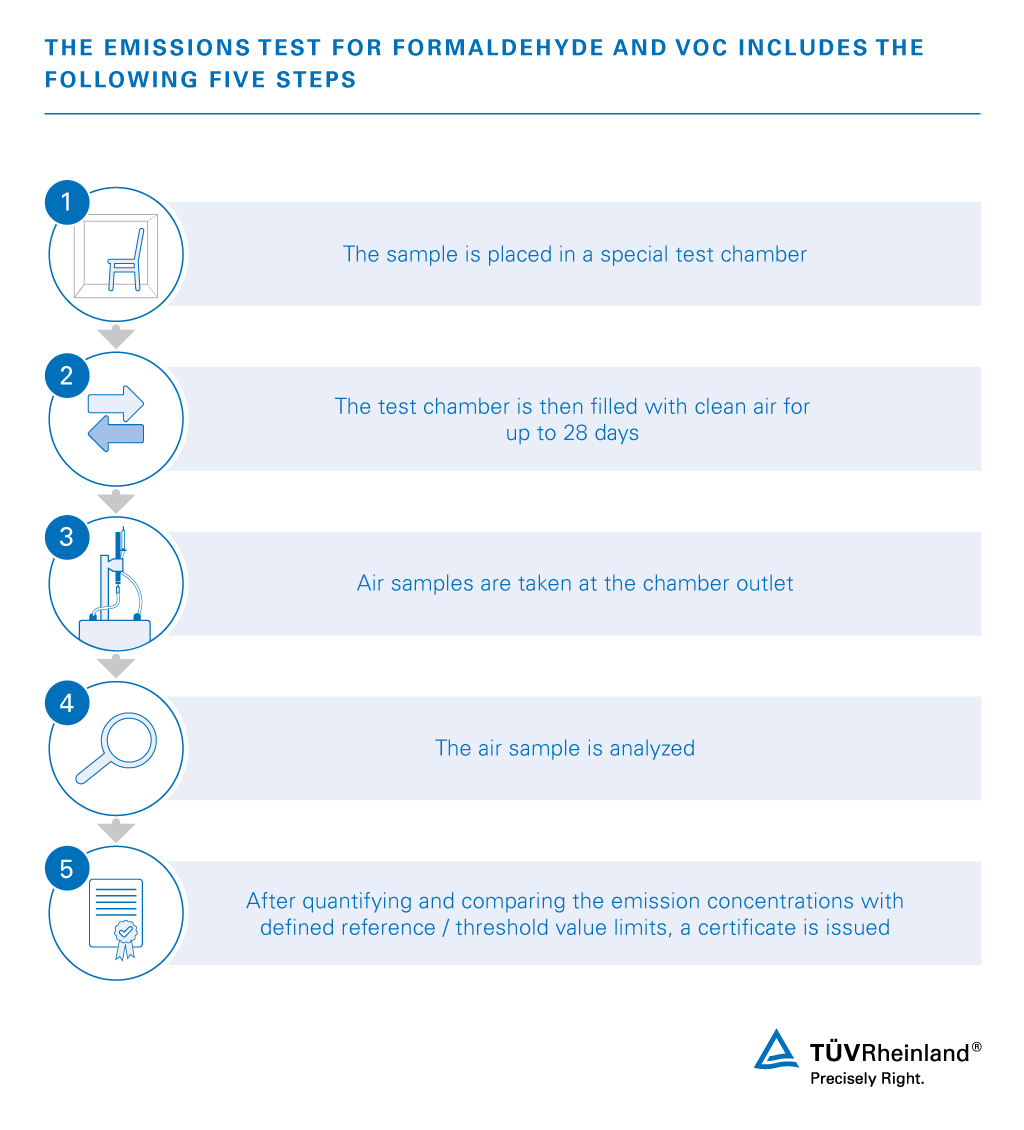
With our VOC and formaldehyde emissions testing, you are on the safe side. Our testing procedure, including VOC analysis, delivers an objective third-party analysis of your products’ chemical emissions. It allows you to demonstrate that your products comply with the relevant safety regulations and reflect the current state of the art. This strengthens trust among your customers and partners, and fosters a greater awareness for sustainability, as emissions testing by experts demonstrates your commitment to the environment and to sustainability.
VOC and formaldehyde emissions testing customized to your needs
We conduct measurements for a wide range of product groups, such as building products and construction materials, furniture (including mattresses), toys, household appliances, and a variety of materials such as synthetic materials, leather, wood-based materials, adhesives, coatings, and IT electronics.
Below is an overview of our VOC and formaldehyde testing services by industry:
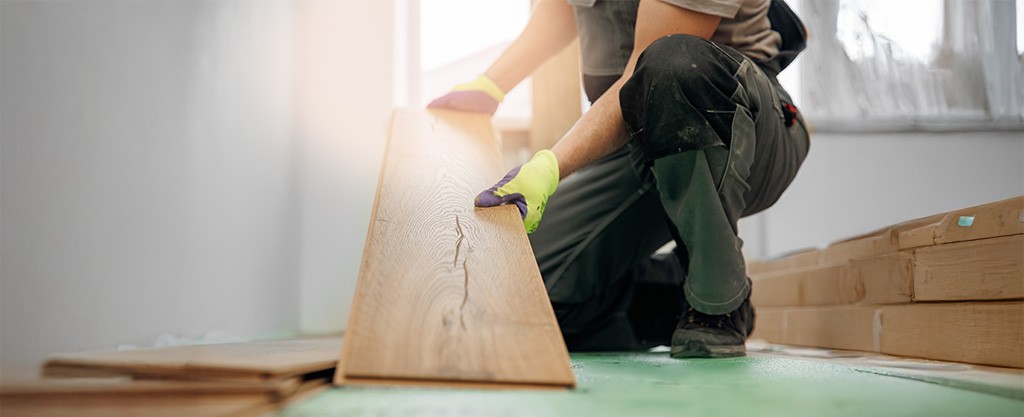
Strengthen the trust in your building products with VOC testing
The measurement of VOC and formaldehyde emissions is particularly important in the construction sector, because across the world, people spend much of their time indoors. In Germany, it is around 20 hours a day. Building products are a major source of indoor air pollution, and long-term exposure to air pollution can lead to health problems and even illness.
VOC and formaldehyde emissions testing shows your commitment to product stewardship as a manufacturer or supplier of building products and construction materials. TÜV Rheinland's emissions testing is a proven way of demonstrating that your building materials and products do not pose a health risk through off-gassing into the indoor air. This provides valuable guidance for health- and environmentally-conscious builders and contractors during construction or renovation.
Standards-compliant VOC testing for building products
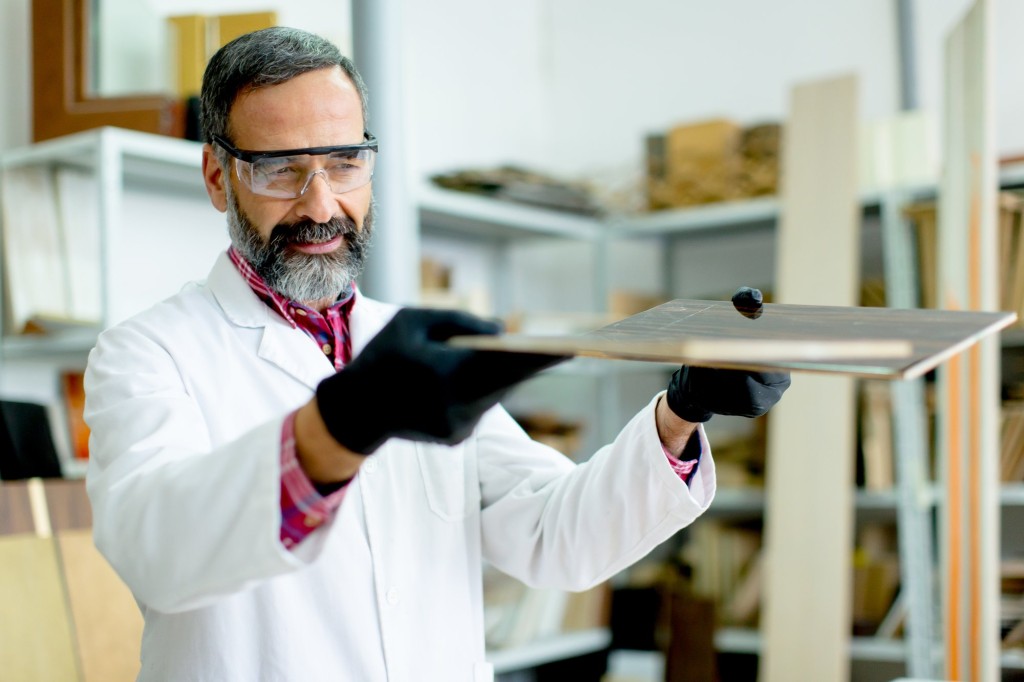
During VOC measurements, our experts test your building products for product-specific chemical emissions. We verify compliance and conformity of the product characteristics with the building product legislation at the national level (MVVTB, Musterverwaltungsvorschrift Technische Baubestimmungen [German Model Administrative Regulation for Technical Building Regulations]).
Health protection is an important aspect at both the national and European level (Construction Products Regulation, CPR). Specific requirements for building products, such as permissible pollutant and emission levels, are partly regulated by harmonized European standards. But regulations that govern chemical law (REACH Regulation, CLP Regulation, German Chemicals Prohibition Ordinance, POP Regulation, and Biocide Regulation) are also incorporated into the assessment of your building products if indicated.
Our emissions testing services at a glance
-
Support with the assessment of building products and construction materials
-
Mandatory and voluntary testing
-
Test chamber analyses for assessment systems and test marks
From building product testing to building certification
Under our “one-stop testing solution,” we offer our customers VOC emissions testing-based analyses tailored to different assessment systems. This lowers the effort, time, and costs involved.
VOC emissions assessments of building products can also help meet the requirements specified in building certification systems such as:
- BREEAM (Building Research Establishment Environmental Assessment Methodology)
- WELL Building Standard
- DGNB (Deutsche Gesellschaft für Nachhaltiges Bauen [German Sustainable Building Council])
- LEED (Leadership in Energy and Environmental Design, Interior Design + Construction)
In addition, we offer the following services for building products:
- Surface condition assessment for floor coverings (abrasion resistance, electrical conductivity)
- Evaluation of sustainability aspects (carbon footprint, life cycle assessment)
- Sanitary evaluation (e.g., mold infestation)
- Radioactivity index assessment for building products regarding ionizing radiation
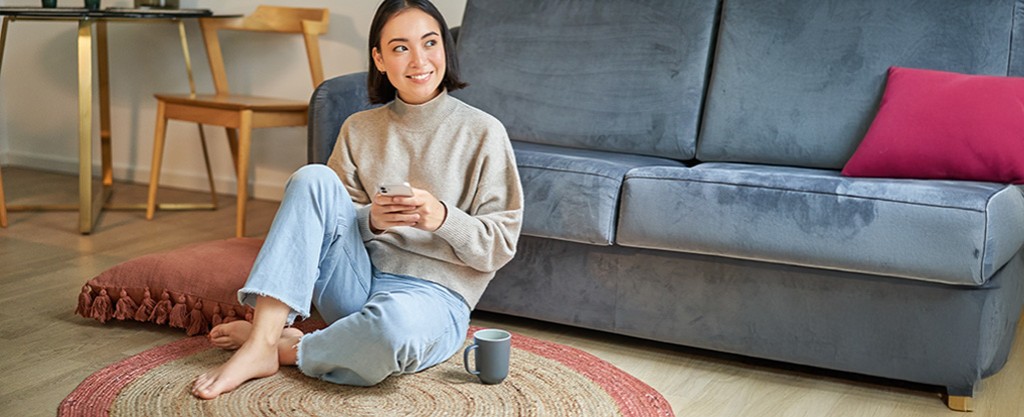
Chemical risks of furniture and furniture components
VOC and formaldehyde emissions testing for the furniture industry is as critical as it is complex. Furniture consists of a variety of components, such as wood-based materials, textiles, synthetic materials, adhesives, and metals. Any of these components may contain unknown chemical substances. Due to the global nature of supply chains, it is difficult to have complete transparency about which substances are used and whether they are used in compliance with the applicable regulations. At the same time, regulatory requirements and reference values are getting stricter worldwide. In international competition, failure to comply with VOC and formaldehyde limit values and any resulting sanctions can have serious economic consequences.
Regulation (EU) 2023/1464 specifies the following binding emission limits for formaldehyde, effective August 6, 2026:
- Products made of wood-based materials, and furniture: max. 0.062 mg/m³
- Other products: max. 0.080 mg/m³
These limits were defined to reduce risks to human health from indoor off-gassing. Test conditions are based on EN 717-1. Many manufacturers will need to adapt their materials or conduct systematic testing.
Our VOC testing for furniture at a glance
For the furniture industry, VOC and formaldehyde emissions testing by TÜV Rheinland offers significant benefits, such as:
- Many years of expertise in emissions testing and VOC analysis
- Customized and industry-specific testing procedures in accredited testing laboratories
- Demonstration of chemical safety as part of product stewardship
- Transparency regarding legal requirements and compliance
- Marketability of your products and prevention of potential liability risks
- Trust and confidence in your products – both among customers and within the supply chain
The REACH Regulation also affects furniture manufacturers
The EU REACH Regulation (EC) No. 1907/2006 requires manufacturers to provide information about hazardous chemicals in their products. Furniture often contains components or materials with substances of concern. This means that furniture falls under the scope of the regulation. Specifically, manufacturers may be obligated to:
- Disclose information to commercial customers and consumers
- Notify the ECHA if certain concentrations are reached
- Register in the SCIP database
- Verify whether other regulations may apply (e.g., RoHS, POP Regulation)
Are you interested in our furniture testing services? Our experts at TÜV Rheinland will be happy to answer your questions or provide further information on specific testing procedures.

Playing it safe thanks to VOC and formaldehyde emissions testing
There are very few items in the home that are handled or put in the mouth as often as beloved children’s toys. They must withstand a lot of wear and tear and commonly remain in children's rooms for years. When purchasing toys, safety is therefore generally a top priority for parents and caregivers.
Thanks to TÜV Rheinland's independent VOC and formaldehyde emissions testing, you can verify that your products do not emit hazardous fumes into the indoor air. Emissions measurements on toys are technically more difficult because of the small pieces that often make up their surfaces. But thanks to adjustments to the technical execution of our test chamber analyses, which allow toy surfaces to be calculated via the smallest three-dimensional geometric shape for example, we can offer VOC and formaldehyde measurements in our test laboratories for toys as well.
Emissions testing expertise you can trust
If you, as a toy manufacturer, decide to have your products tested for VOC and formaldehyde emissions by TÜV Rheinland, you opt for comprehensive one-stop testing services and provide your customers with the assurance they need for making a purchase decision.
Our experts test and certify your toys in accordance with the applicable national and international standards for toy safety. We also perform international certifications according to ISO standards.
You will enjoy the benefits of our state-of-the-art laboratories, which are designed for maximum efficiency. Are you interested in having your products tested and certified for indoor air safety? Contact us now to learn more about options for emissions testing of toys.

Keeping homes safe with VOC testing by experts
Household appliances are part of our daily routines from morning to night. We use electric toothbrushes, prepare our food using kitchen appliances, and wear clothes that just came out of the dryer. It is therefore important that these household helpers do not emit harmful fumes into the air we breathe indoors, as long-term exposure to air pollution can lead to health problems and illness.
VOC and formaldehyde analysis demonstrates your product stewardship as a manufacturer of household and electrical appliances and offers your customers a high level of safety. TÜV Rheinland's certified emissions testing can thus serve as a helpful decision-making aid in today’s growing markets. Testing allows you to verify and demonstrate that your emissions-tested household appliances do not pose a health risk to your customers.
How does emissions testing of household appliances work?
VOC and formaldehyde emissions into indoor air can be tested based on DIN ISO/IEC 28360 and ISO 16000-9 for electrical household appliances. Emissions testing can be carried out while the appliance is in operation. The operating time and the time of air sampling must be adapted to the realistic usage scenario of the appliance tested.
Are you interested in VOC testing of household appliances? Our experts at TÜV Rheinland will be happy to answer your questions or provide further information on specific testing procedures.
|
|
TÜV Rheinland's testing laboratories
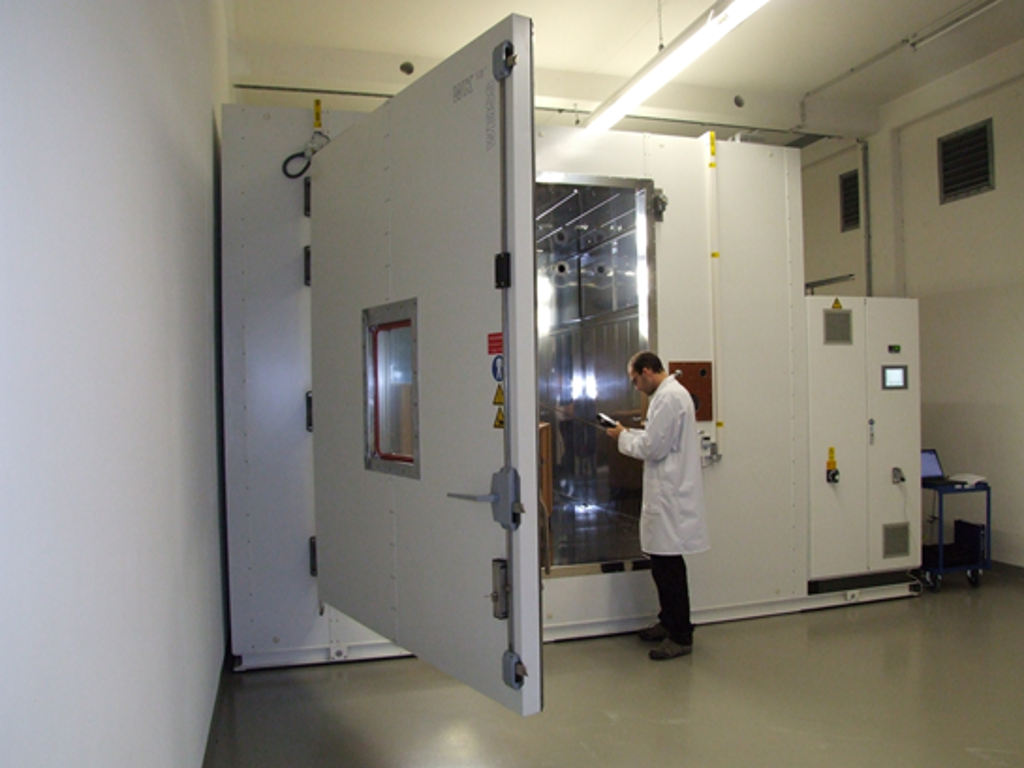
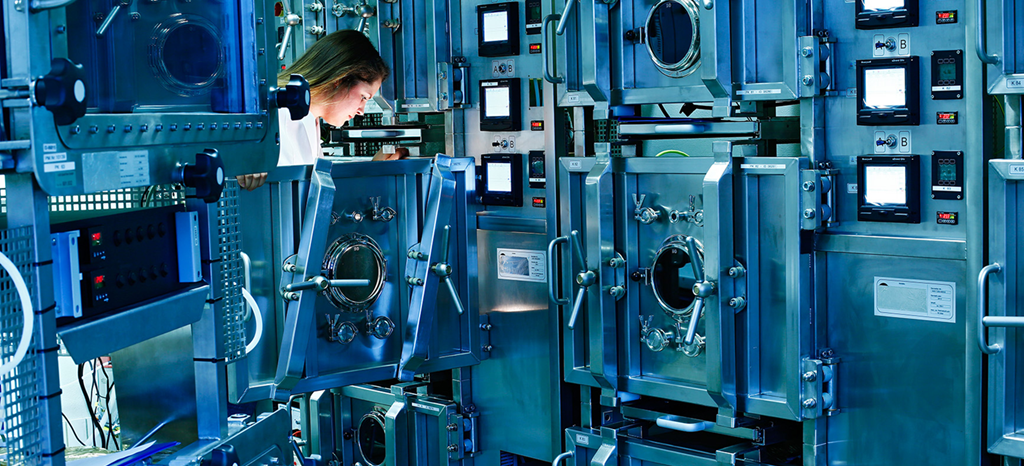
You want to have your products tested for VOC and formaldehyde emissions and are looking for the right partner? Thanks to our wide range of test chambers in various sizes (from 20 l to 25 m³), we have a suitable test chamber for almost any product. Our laboratories (Nuremberg, Hong Kong, Shanghai, Shenzhen, Ho Chi Minh City, Bangkok) are all ISO 17025 quality accredited. Our testing procedures comply with the product standards on which the accreditation is based. In addition, the test facility in Shenzhen is recognized as a third-party certifier under CARB and TSCA TITLE VI.
We are your one-stop solution for all harmful substances testing. We are constantly expanding our test chamber capacities, increase our resources, and offer state-of-the-art emissions measurements.
Our laboratories are approved for testing under a variety of testing and certification programs, including:
- “Blue Angel”
- BIFMA
- GEV EMICODE
- Automotive (VW/Audi)
Testing laboratory expansion since 2025
In 2025, we were able to expand our main laboratory at the Nuremberg site, which has enabled us to offer our wide range of testing procedures even more efficiently and quickly.
Our new high-temperature chamber allows emissions to be measured under precisely controlled high temperatures, which is particularly relevant for the automotive industry and international trade.
A new micro chamber allows emissions measurements to be carried out rapidly. If a product contains different materials, parallel short-term measurements can be used to identify the emissions source quickly and reliably. It also allows different materials to be compared with each other in order to identify the best material.
With its impressive testing capacity (over 100 test chambers in various sizes, including 26 x 1 m³ test chambers, 6 m³ and 25 m³ temperature-controlled test chambers), our laboratory in Nuremberg serves as an LBO-approved testing, monitoring, and certification body (PÜZ Center, DIBt), a testing body for building products notified under EU law (Regulation (EC) No. 305/2011).
Build trust – with our test mark

With more than 30 years of experience in VOC and formaldehyde emissions testing, TÜV Rheinland combines a high level of technical expertise with services from a single source. Our measurements allow you to assure your customers that your products do not emit toxicologically relevant volatile substances into the indoor air.
Emissions testing based on comprehensive expertise
Leveraging our many years of experience and the analysis of extensive data sets, we develop our own testing and certification criteria for various product groups, all while keeping up with the latest developments in technology. Our services include developing customized solutions tailored to specific customer requirements. In addition, we support our customers in the development of new low-emission products and materials.
We help you demonstrate your commitment to the safety of your customers. Our experts will be happy to provide you with information about our comprehensive emissions measurements.
Contact us today!
FAQ – Answers to your most frequently asked questions
Further information for you

We help you reduce the emissions of your products.